uk-based blogger writing about history, politics, and much more.

Book Review: Assembling India's Constitution, De/Shani
Turning the page on the notion of frozen constitutions
Bauhaus Polemicist
3/7/20262 min read
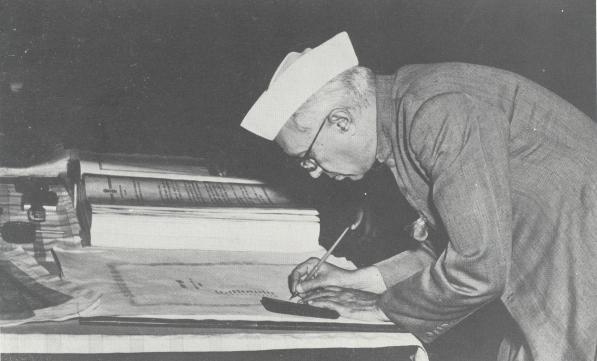
I have recently finished reading a treasured Christmas present - Rohit De and Ornit Shani’s Assembling India’s Constitution: A New Democratic History.
This has been a very enjoyable read. The book revises a traditional scholarly view of the Indian Constitution - adopted in 1949 - as a largely elite document that emerged from within the high-minded confines of Constituent Assembly debates. Rather, copious Indian publics initiated their own processes of political consultation and debate from around 1946 which impinged heavily on how the constitution took shape, creating a phenomenon of push and pull with the centre that has persisted into the present day.
Full disclosure: I am not a scholar of constitutional histories, and am therefore not well placed to comment on the intricacies of the historiography that this monograph addresses. However, its arguments certainly fit into a wider shift in South Asian studies towards highlighting the contributions of wider swathes of bureaucrats and indeed publics themselves to early Indian postcolonial modernity.
In this vein, I found the authors’ focus in later stages of the book on the mobilisation of tribal groups to be particularly instructive. The authors strongly emphasise how tribal peoples sought to defend and extend their traditions of democratic deliberation and decision-making into constitutional realms. This rails directly against the elitist notion still commonplace in political histories that educated governors themselves steadily bestow progress and development on the populations that they govern.
The work captures how mired governmental figures were in viewing tribal groups in imperialist terms as backwards and in need of advancement - if also in incipient nation-building terms as groups among whom a lead tribe needed to be identified suitable to entering into decision-making processes. This argument that late colonial influences blended with the sense of a break with the past, and opportunity to shape the future, in the India of 1946-1950 is convincing.
There are points at which the book could take further interpretive steps from its central argument. For example, in discussing how ‘the Constituent Assembly largely ignored the constitutional aspirations of India’s tribal publics’, the authors identify that the Assembly remained preoccupied with a notion of how such peoples required ‘development’.1 While acknowledgment is given to the precedence of colonialism itself in shaping the attitudes of Assembly members, more commentary might be offered here on the notion of ‘development’ itself - the subject of much recent historiography.2 Did Indian publics themselves engage with, or coin, notions of ‘development’, or was this a purely elite concept merging colonialist presumptions with nation-building imperatives?
This reservation marries with a reservation to provide much commentary on contemporary Indian politics. The final page of the book paints a rosy picture of how processes of democratisation have emerged from within the fabric of localised constitution-making, to the extent that the constitution itself ‘remains an open [site of] struggle’.3 What is the most obvious manifestation of this in contemporary Indian politics? It might not be the job of historians to rigorously dissect how their research shines a light on the present day, but some conjecture in the conclusion is surely welcome.
Overall, this book uses an innovative source base and methodology, and provides conclusions which are both accessible and compelling. Constitutions are not, as conservatives typically view them, monuments to timeless wisdom, but rather, the reflection of inevitable political power struggles whose specific manifestation in different times and spaces is highly intriguing. De and Shani’s work offers rich insights into this in the Indian context while not making the mistake of conflating democracy itself - in the sense of cooperation on political decisions - with the arrival of centralised parliaments and assemblies, and is as such a valuable and sophisticated intervention.