uk-based blogger writing about history, politics, and much more.
Book Review: Beyond the Wall, Katja Hoyer
Best 2024 reads
Bauhaus Polemicist
3/14/20267 min read
Among my favourite reads of 2024 was Beyond the Wall by Katja Hoyer.
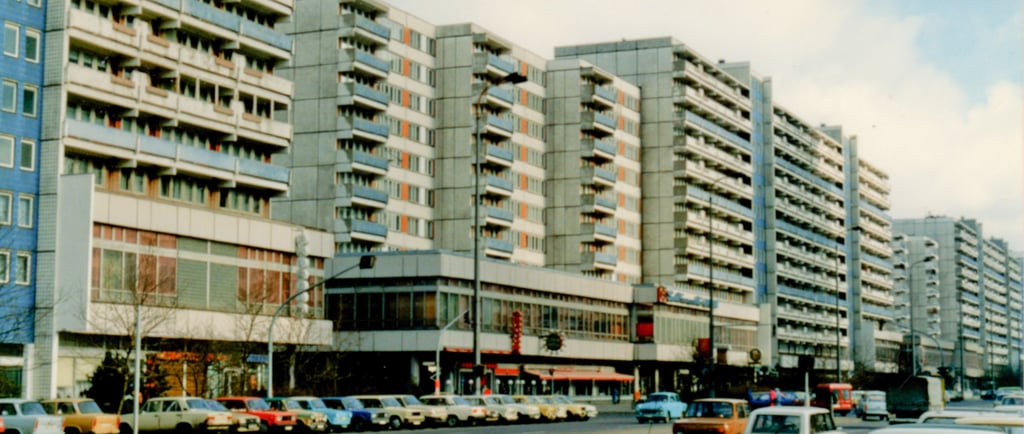
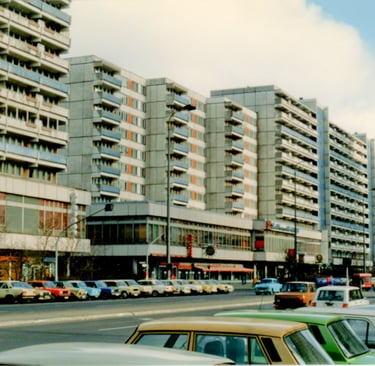
Having lived in a bucolic Berlin flat ten years ago which was built by the German Democratic Republic (GDR) regime in the 1960s, I always sensed that there was a more nuanced story to be told about post-war East Germany than the standard Cold War juxtaposition of ‘free’ against ‘totalitarian’.
It turns out that this story can be told by refocussing one’s analytical lens towards ordinary citizens’ experiences and aspirations. This does not mean denying the role of Soviet-style communism in shaping the state, but simply avoiding the conflation of such influences with the entire East German project, or nation, itself.
In relation to this, Hoyer writes early on that ‘there was genuine enthusiasm from groups all across eastern Germany who saw a chance to redeem themselves and their country by building a better Germany and helping to extinguish the embers of fascism’ in 1945. This enthusiasm did not simply dim with the increasing centrality of the Socialist Unity Party of Germany (SED) to East German politics in years to come, but found expression through myriad channels.
The book picks up on important nuances; for example, Stalin himself was hesitant at the prospect of an East German satellite aping his politics for diplomatic reasons. Authoritarian tendencies within the state reflected the urges of its own leaders as much as the unseen machinations of some despotic Soviet overlord.
Even so, Hoyer argues that sections of the SED resisted the Stalinist direction of policymaking in 1950s East Germany - as did ordinary people - and that such a shift was not therefore inevitable. One does wonder, as a non-expert in this field, why the GDR like so many other communist states ended up taking this authoritarian direction nonetheless. Was the centralised, tight-knit style of Marxist-Leninist politics not key?
Hoyer’s achievement in distinguishing the public as subjects, not just a passive and oppressed mass, within post-war East German history is arguably made possible by her refusal to presume that such publics naturally desire American-style individualism and freedom. It would be easy to quietly indulge the fantasy - not least given the fall of the Soviet Union - that people simply want liberal capitalism. However, as we see around us in the world of the 2020s, the idea that citizenries plump for centrism and technocracy over promises of community and belonging when given the choice is simplistic at best.
In this vein, Hoyer emphasises how, in the case of East Germans, ‘the experiences of fascism and war…had led many Germans to value stability and unity over pluralistic discussion’. There was not any automatic yearning for liberalism, and East Germans persisted with a dissatisfactory regime whilst they felt that they could still pursue stability, comfort, and belonging in their own lives.
Against this backdrop, Hoyer goes on to render ordinary citizens’ efforts at self-expression across the lifespan of East Germany without condescension. She highlights early accomplishments including a serious effort at denazification, where West Germany openly welcomed Nazis back into its civil service.
Hoyer argues that the GDR grew into more of a German project than a Soviet one. The Soviets instructed Walter Ulbricht to desist from propagating class war and attacking liberals and social democrats; they did not seek to be dragged into a war in central Europe. When GDR leaders did moderate their politics, this appears to have reduced the numbers of people attempting to escape the state and brought skilled workers such as scientists back into the economy.
Ironically, then, in Ulbricht responding to such Soviet counsels of caution by later choosing to plot his own course, it was through becoming more ‘German’, or homegrown - rather than more Soviet - that authoritarianism grew. To be sure, Soviet caution stemmed from geopolitical concerns, not some liberalism they had been clothing since the 1920s, but what is intriguing about the book is how far it demonstrates the depth of homegrown rather than outside direction of GDR politics.
Ulbricht’s militarisation of the GDR created a scenario whereby those ‘who craved meaning and belonging in contrast to what they perceived to be the empty consumerism of the West’ articulated themselves through channels that involved taking ‘a stake in the defence of their new country’. Although Hoyer does not state as much, this surely generated a vicious martial cycle which lasted for the rest of the country’s history.
Again, there is a question to be asked around how far the structure of the SED facilitated the growth of such authoritarianism if, as Hoyer proposes, political views varied across its ranks. How did figures of the ilk of Ulbricht come to call the shots and progressively ramp up supervision of their own citizenries? I sense because Marxism-Leninism dominated the international communist political scene.
The socialist economic system which built the flat I lived in ten years ago also produced a more tolerable lot for women than existed in West Germany in terms of the capacity to balance family life and career.8 This dynamic has been written about elsewhere whereby Kristen Ghodsee argues that communist social safety nets liberated women from caring constraints imposed without these nets. By 1981, 91% of GDR women were in employment, the highest rate in the world at that time.
Hoyer brings out how such ventures in the direction of social equality created a sense of solidarity that somewhat fireproofed the regime. When the wall went up - the defining travesty of Berlin’s Cold War history - the state found new means to forge this solidarity through what Hoyer terms ‘a remarkably successful system’ of subsidised holidays that allowed the masses to enjoy themselves in the 1960s’.
Again, it is satisfying, thanks to Hoyer’s work, to be able to penetrate beneath propagandistic latter-day derisions of such schemes and distinguish poor peoples’ appreciation of them. This implies a reckoning with the benefits of socialistic economic systems tilted at achieving equality and solidarity more than with political dictatorships whose paranoia partially reflected the diplomatic isolation enforced by dominant western Cold War powers.
As evoked at the beginning of this review, from the 1960s, the GDR built new housing estates consisting of prefabricated concrete blocks which were genuinely innovative at the time. Hoyer emphasises how desirable these were.
The author does not stray from the oppressive aspects of the GDR. The best known of these is the Stasi, led by Erich Mielke, an official who GDR leaders allowed to expand his influence in the 1960s-1970s with insidious consequences. The Stasi used brutal tactics on those they impounded, while creating a culture whereby citizens spied on citizens.
In this vein, Hoyer begins to argue that the GDR’s increasingly wide-ranging social achievements - including getting vastly more working class students into universities, and improving East Germans’ lives enormously during the 1960s such that working hours were reduced to 43.75 for the same pay - was offset by its political decrepitude.
This had happened across a period in which the GDR was isolated by West Germany’s ‘Hallstein Doctrine’ - which focussed on preventing a huge number of states trading with it - leaving it potentially beholden to the Soviets. This came to a head in 1967 when the GDR expressed its support for the Middle Eastern nations during the Six Day War. Nasser was considering recognising it as a sovereign nation around this time and wrecking the Hallstein Doctrine.
Beyond the Wall’s ‘Planned Miracles’ chapter considers Erich Honecker’s ascendancy as new GDR leader from 1971, and an associated conflict with aspirational youth. East German youths sported Levi’s that oozed Western culture and fashion, making communist leaders uncomfortable. Honecker was less intrigued by notions of potential German reunification than his predecessor and more inclined towards the Soviet course, which surely did not help the situation.
Hoyer emphasises the spaces which East German citizens carved out within the system for artistic as well as religious reflection. These spaces were limited, but their existence marked the GDR out from various totalitarian regimes with which it is frequently compared. It appears that such creative and cerebral minds relished the opportunity to explore connections between their own values and socialist ideals, while still resenting commonplace political interference with their freedoms.
The ideal of solidarity which East Germany manifested was more than rhetoric. For example, the GDR provided considerable aid to flagging countries such as Cuba, receiving very little by way of paid labour in return. In other words, the economic rationale for its drawing connections with socialist partners is less clear than the ideological symbolism. Socialism carried resonances which had not been straightforwardly departed or negated within the GDR; the country and its people found outlets for their expression.
Ultimately, though, familiar problems resurfaced in the 1980s. Militarisation grew and extended to the earliest stages of education. Earlier artistic freedoms were proscribed. The Stasi listed categories of citizens amid which there was only one trustworthy type and five enemies. Relations between the Soviets and East Germany were again strained, which forced GDR leaders to attempt to resurrect various historic German figures such as Martin Luther and Frederick the Great. These absurdities pointed towards the awkwardness of East Germany’s position within the international order.
Hoyer again disentangles citizen perceptions from latter-day triumphalist historical narratives in the closing pages of the book. The GDR achieved highly in elite sports and many people took pride in their small country for this. Female ambition continued to be the norm in the workplace. An extraordinary system of childcare facilitated this. However, dissent also accelerated; environmentalists and pacifists were among those who decried the militarism of society. Mass gatherings became impossible to withstand and the regime collapsed under its own weight.
Hoyer makes the point at the close of the book that east Germans are dissatisfied with centrist politics today in the same propensity as they hearkened to socialist ideology yesterday; namely, the elevation of solidarity and belonging over tedium and technocracy.
This serves to reiterate a key insight of the book - that common people’s aspirations were and are recoverable from those grand narratives of history which are indelibly shaped by history’s perceived victors. Excellent works of history such as Hoyer’s are able to divine such aspirations, visions, and perceptions in isolation from wider Manichean storylines recited by contemporary political actors with something to hide.